Plantar Fasciitis in KL: The Real Reason Your Heel Won't Stop Hurting
That Sharp Heel Pain Every Morning? It Could Be Plantar Fasciitis
You take your first step out of bed and ouch. A stabbing pain shoots through your heel. You hobble to the bathroom, hoping it passes. After a few minutes, it eases off. So you ignore it and get on with your day.
Sound familiar? The most likely cause is plantar fasciitis (pronounced plan-tar fash-ee-EYE-tiss). The leading cause of heel pain in adults, and one of the most common conditions treated at KL Foot Specialist Podiatry in Sri Petaling, Kuala Lumpur.
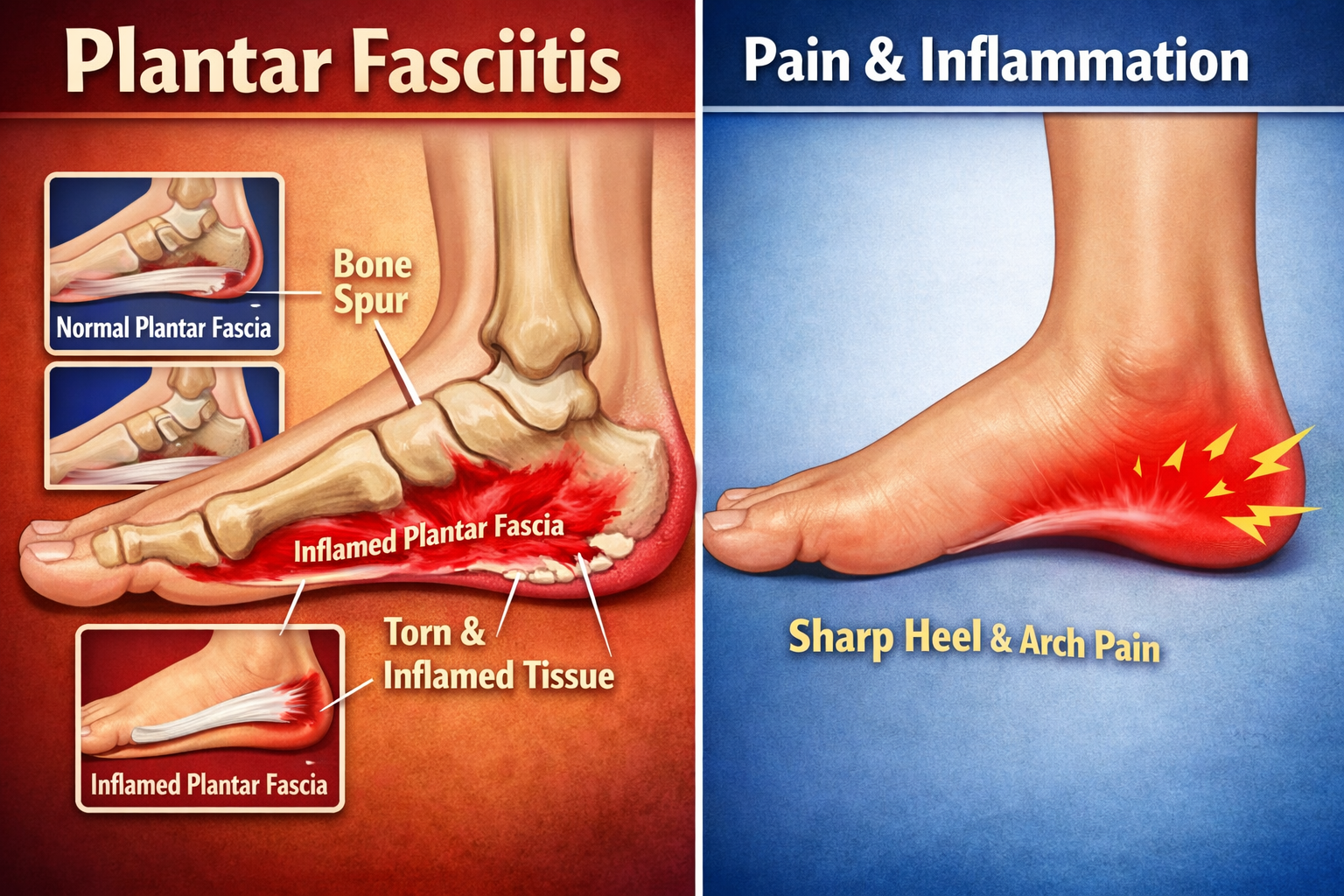
A simple visual provided to better understand where is plantar fasciitis
What Is Plantar Fasciitis?
The plantar fascia is a thick band of tissue that runs along the bottom of your foot, connecting your heel bone to the base of your toes. Think of it like a strong rubber band that supports your arch with every step you take.
When this band is overstretched, overloaded, or subjected to repeated stress, small tears develop in the tissue. Your body responds with inflammation and that inflammation is what causes the pain, stiffness, and tenderness in your heel.
Signs You Might Have Plantar Fasciitis
The classic warning signs include:
Heel pain that is worst first thing in the morning. Your first few steps out of bed are often the most painful
Pain after sitting or resting for a long time - getting up after a long meeting or car ride triggers sharp heel discomfort
Pain that eases after walking a little, then worsens again after prolonged standing or activity
Tenderness at the bottom of the heel when you press firmly on it
Tightness in the arch or sole of the foot, especially after exercise
Important: Pain that is constant, worsens throughout the day without relief, or is accompanied by numbness and tingling may indicate a different condition. A proper clinical assessment is always recommended.
Why Does Plantar Fasciitis Develop?
Plantar fasciitis rarely happens overnight. It builds up gradually due to one or more of these factors:
Flat feet or high arches - both place abnormal load on the plantar fascia
Tight calf muscles or Achilles tendon - limits ankle mobility and puts extra strain on the heel
A sudden increase in activity - ramping up exercise too quickly, or starting a job that requires standing all day
Unsupportive footwear - flip-flops, flat sandals, and worn-out shoes offer little arch support; a very common issue in Malaysia where flip-flops are everyday wear
Body weight - extra load on the feet increases stress on the fascia with every step
Age - most common in adults aged 30–60, though it can affect anyone
Occupation - teachers, nurses, retail workers, and factory staff who stand on hard floors all day are at higher risk
In KL and the Klang Valley, the combination of hot weather, flip-flop culture, hard tiled floors in homes and shopping malls, and long hours on your feet all contribute to how widespread plantar fasciitis is here.
Why You Shouldn't Ignore It
Many people tell themselves it will go away on its own. Sometimes it does. But left untreated, plantar fasciitis can:
Become chronic - persisting for months or even years
Lead to compensatory gait changes - you unconsciously start walking differently to avoid the pain, which then causes problems in your knees, hips, or lower back
Develop into a heel spur - a bony growth on the heel bone caused by prolonged inflammation
Significantly affect your quality of life - limiting your ability to exercise, work, or simply walk through a shopping mall without discomfort
The earlier it is addressed, the faster and more completely it resolves.
How a Podiatrist Treats Plantar Fasciitis
The good news: plantar fasciitis responds very well to conservative, non-surgical treatment when managed correctly. At KL Foot Specialist Podiatry, every treatment plan is evidence-based and tailored to each patient's specific needs.
Biomechanical Assessment
Before any treatment begins, we assess. Our biomechanical assessment examines how you walk, how your foot loads with each step, how your arches behave, and what is causing the plantar fascia to be overloaded in the first place. Treating plantar fasciitis without understanding its root cause often means it comes back.
Custom Orthotics
If your foot structure or walking pattern is contributing to the problem - which it very often is - custom orthotics can make a significant difference. These are not generic pharmacy insoles. They are prescribed and designed from a 3D scan of your feet, and engineered to redistribute load away from the inflamed tissue so your heel can heal properly.
DolorClast® Shockwave Therapy
For stubborn or long-standing plantar fasciitis that hasn't responded to rest or conventional treatment, DolorClast® shockwave therapy is highly effective. Sound waves are directed into the affected tissue to stimulate blood flow, break down damaged tissue, and restart the body's natural healing process. No surgery. No needles. No downtime.
DolorClast® High Power Laser Therapy
Laser therapy uses focused light energy to reduce inflammation and accelerate tissue repair at a cellular level. It is completely painless, non-invasive, and drug-free. Many patients notice significant relief after just a few sessions.
Stretching & Rehabilitation Guidance
You will also receive a personalised stretching programme - particularly targeting the calf muscles and plantar fascia - that is clinically proven to reduce tension and speed up recovery. These are exercises you can do at home, at the office, or before your morning routine.
When Should You See a Podiatrist?
See a podiatrist if:
Heel pain has persisted for more than 2–3 weeks
Morning pain is disrupting your daily routine
The pain is getting progressively worse over time
You have tried rest, stretching, or over-the-counter insoles without improvement
You have diabetes - foot conditions in diabetic patients require specialist management
You do not need a GP referral to see a podiatrist. You can book directly.
Book a Consultation at KL Foot Specialist, Sri Petaling
If any of the above sounds like what you're going through, don't wait for it to become a chronic problem. At KL Foot Specialist Podiatry, we provide personalised, evidence-based care for plantar fasciitis and all heel and foot pain conditions — without surgery, without guesswork, and without one-size-fits-all solutions.
Ready to take the first step? Book a consultation with KL Foot Specialist Podiatry in Sri Petaling, KL.