Are Barefoot Shoes Good for Your Feet? A Podiatrist's Honest Take
Barefoot shoes are everywhere on your TikTok and Instagram feed right now; influencers claiming they "fixed" their flat feet, ended their heel pain, and reconnected with their "natural" gait. If you've been scrolling through Shopee or Lazada wondering whether a pair of Vivobarefoot, Xero Shoes, or one of the newer minimalist brands landing in Malaysia is right for you, this post is for you. As a podiatrist based in Sri Petaling, Kuala Lumpur, here's an honest, evidence-based answer without the hype and without the fear-mongering.
Reviewed by Patricia Ting, podiatrist at KL Foot Specialist Podiatry - Australia-trained with 6+ years of clinical experience across Melbourne, Brisbane, and Singapore. Last reviewed: April 2026.
Key Takeaways
Barefoot shoes (also called minimalist shoes) have zero drop, thin flexible soles, and wide toe boxes. They let your feet move more naturally but remove almost all arch support and cushioning.
The claim that they "cure" plantar fasciitis or flat feet is not backed by strong clinical evidence. Some people benefit; many make existing conditions worse.
If you have active plantar fasciitis, severe flat feet, bunions, diabetes, or balance issues, you should not switch without a podiatrist's assessment.
The single biggest mistake people make is transitioning too fast; a safe switch takes 8–12 weeks minimum, combined with foot-strengthening exercises.
Before you buy, get a biomechanical assessment at KL Foot Specialist Podiatry in Sri Petaling. We'll tell you honestly whether barefoot shoes are right for your feet.
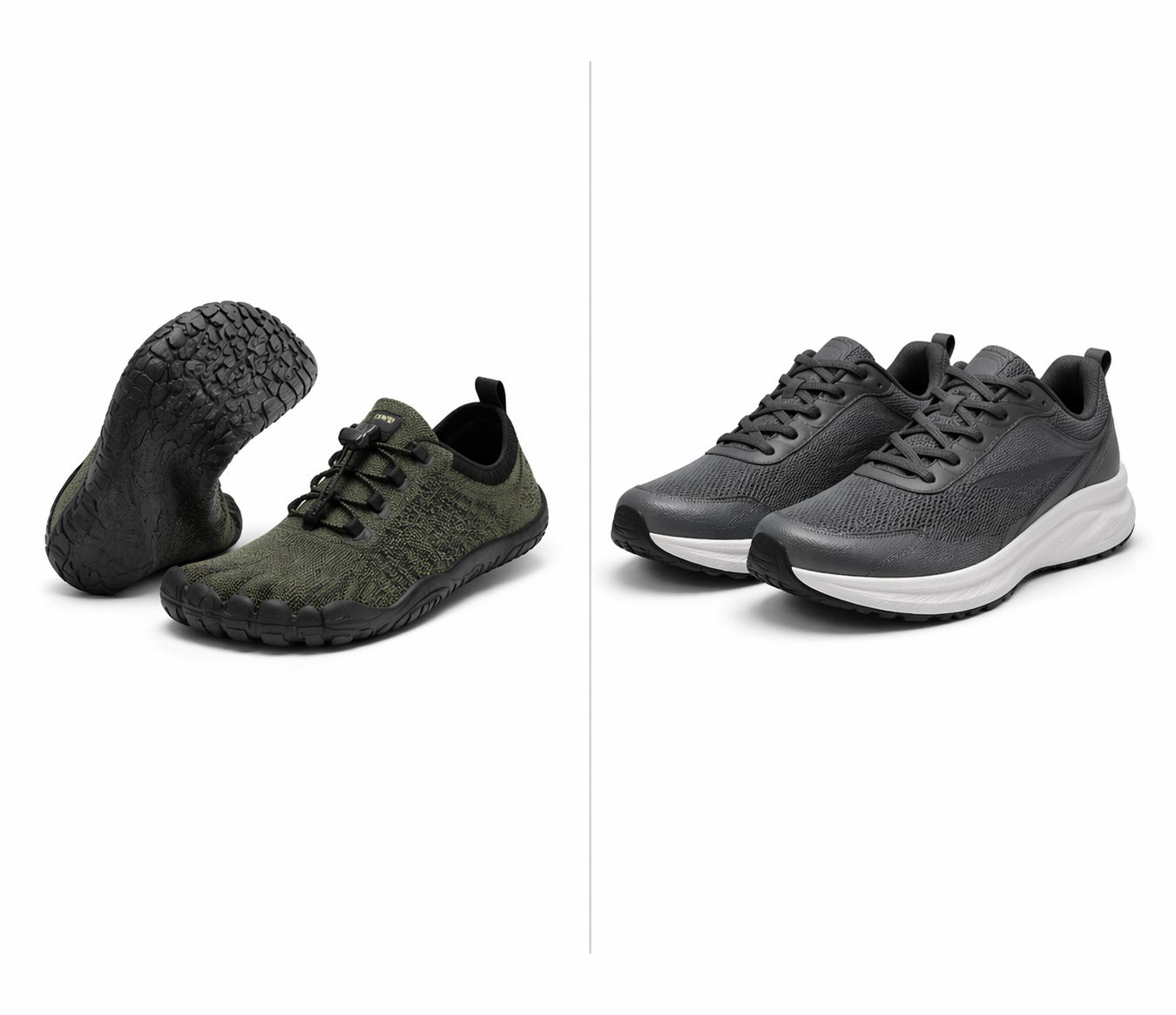
What Are Barefoot Shoes?
Barefoot shoes (also called minimalist shoes) are designed to mimic the experience of walking barefoot while still protecting your feet from the ground. They share a few key features:
Zero drop; the heel and forefoot sit at the same level, unlike conventional shoes where the heel is elevated
Thin, flexible soles - typically very thin compared to conventional shoes, allowing you to feel the ground beneath you
Wide toe box - giving your toes space to spread naturally
Minimal arch support - no built-in arch shaping or cushioning
The idea is to let your foot move the way it was designed to move, rather than being held in a fixed position by a heavily structured shoe. Brands like Vivobarefoot and Xero Shoes are increasingly available to Malaysian buyers through online marketplaces, and a growing cluster of local and regional retailers now carry them.
The Claimed Benefits — And What the Evidence Actually Says
Barefoot shoe advocates make some big promises. Here's how they hold up.
Stronger foot muscles - plausible, with caveats
Some research suggests that minimalist footwear can strengthen the small intrinsic muscles of the foot over time, particularly when combined with targeted foot exercises. For people with healthy feet, this is a legitimate benefit. It's not unique to barefoot shoes, though the same outcome can be achieved with dedicated foot-strengthening exercises while wearing conventional shoes.
Better posture and natural gait - partially supported
A zero-drop shoe does change how your weight is distributed and how you strike the ground. Some people feel more balanced and upright. Others develop calf pain, Achilles tendinopathy, or forefoot issues because their bodies are not conditioned for the altered mechanics. Outcomes vary a lot between individuals.
"Cures" flat feet or plantar fasciitis - this is where the hype breaks down
This is the most common and most misleading claim you'll see online. The honest truth: there are no large, high-quality clinical trials proving barefoot shoes cure plantar fasciitis or collapsed arches. The evidence base is mostly indirect studies on foot muscle strengthening, mechanism-based reasoning, and individual case reports. For some people with mild issues and strong foundations, minimalist footwear combined with proper rehabilitation can help. For others, especially those with an active flare; removing support tends to make things significantly worse.
Who Should NOT Jump Into Barefoot Shoes
As a podiatrist, these are the groups I regularly see get hurt by an unguided switch to minimalist footwear. If you fall into any of these categories, please speak to a podiatrist before switching.
People with active plantar fasciitis or heel pain. If you're currently experiencing that stabbing first-step-in-the-morning heel pain, your plantar fascia is already inflamed and under strain. Removing cushioning and arch support at this stage typically makes symptoms worse, not better. The tissue needs to heal first.
People with severe flat feet or significant overpronation. Mild flat feet in someone with strong foot muscles may tolerate a gradual transition. But if your arches visibly collapse when you stand, going barefoot immediately overloads the posterior tibial tendon and plantar fascia.
People with established bunions (hallux valgus). The wide toe box is genuinely one of the better features of barefoot shoes for bunion sufferers. But removing arch support at the same time can accelerate the underlying overpronation that often drives bunion progression. It's a trade-off that needs professional guidance.
People with diabetes or reduced sensation in their feet. Thin soles mean less protection against sharp objects, heat (hot tarmac in KL is no joke), and pressure points. For diabetic patients, this protection matters enormously.
Older adults and anyone with balance concerns. Reduced proprioception and slower reflexes mean barefoot shoes on uneven surfaces can increase fall risk.
Very active children still growing. Growth plates, developing arches, and high-impact play don't always pair well with minimal footwear - this needs case-by-case assessment.
The Transition Mistake Almost Everyone Makes
This is the single biggest reason barefoot shoes injure people: switching too fast.
The typical pattern looks like this. Someone buys a pair online after watching a convincing YouTube video. They wear them all day on Monday. By Wednesday their calves are screaming. By Friday they have Achilles pain. Two weeks in, they've developed plantar fasciitis or a stress fracture they didn't have before.
Your feet have likely spent decades in cushioned, supportive shoes. The intrinsic muscles, the Achilles tendon, the plantar fascia; they've all adapted to that support. Removing it overnight is like deciding to run a marathon tomorrow because you walked 5 km today.
A proper transition looks more like this:
Weeks 1-2: Wear them indoors only, for 30–60 minutes a day
Weeks 3–4: Short outdoor walks on even surfaces
Weeks 5–8: Gradually add varied terrain and longer distances
Weeks 9–12+: Full daily wear if your feet have adapted without pain
Throughout the transition, you should be doing targeted foot-strengthening exercises like calf raises, toe spreads, short-foot exercises, single-leg balance work. Barefoot shoes don't strengthen your feet on their own. They expose weaknesses. What you do about those weaknesses matters more than the shoes themselves.
The Wide Toe Box Point - Which Is Actually Worth Stealing
Here's something worth acknowledging: most conventional shoes especially office shoes, heels, and many running shoes have toe boxes that are too narrow. This contributes to bunions, corns, ingrown toenails, and Morton's neuroma. The wide toe box principle of barefoot shoes is genuinely a good one.
You don't have to go fully barefoot to benefit from it. Many conventional brands now offer "foot-shaped" shoes with anatomical toe boxes while retaining sensible cushioning and support. For a lot of Malaysians, especially those who want healthier feet but have genuine biomechanical issues'; this is the more practical middle ground.
Podiatry vs Physiotherapy vs Just Reading Online Reviews
A quick note on why this is a podiatry question rather than something to solve with a YouTube video or a physiotherapist alone. Podiatrists are specifically trained in foot structure, gait, and lower-limb biomechanics - the exact areas that determine whether barefoot shoes will help or harm you. A physiotherapist can absolutely help with rehabilitation and strengthening, and we often work alongside them. But the assessment of whether your foot structure is suited to minimalist footwear, and the prescription of orthotics if it isn't, sits firmly in the podiatrist's domain.
When to See a Podiatrist Before You Switch
If any of the following apply, book a biomechanical assessment before you buy your first pair:
You currently have foot, heel, knee, hip, or lower back pain
You have flat feet, high arches, or known overpronation
You have bunions, plantar fasciitis, or any diagnosed foot condition
You're diabetic or have reduced sensation in your feet
You've tried minimalist shoes before and injured yourself
You're an athlete or runner considering a switch for performance reasons
At KL Foot Specialist, a biomechanical assessment uses 3D foot scanning and gait analysis to map exactly how your feet behave under load. We can then tell you honestly whether barefoot shoes are a reasonable option for you, whether a gradual transition plan makes sense, or whether a custom orthotic inside a conventional shoe would serve you better. Some patients even use orthotics and minimalist shoes in rotation, such is a tailored hybrid that barefoot purists don't talk about but that works well in real life.
The Honest Bottom Line
Barefoot shoes are neither a miracle cure nor a disaster. For a healthy, strong-footed adult who transitions slowly and does the strengthening work, they can be a legitimate footwear choice. For someone with an active foot condition or significant biomechanical issues, switching without professional guidance is one of the faster ways to end up in pain.
The marketing treats them as a universal upgrade. They aren't. Your feet are individual, and so is the right footwear for them.
Talk to a Podiatrist Before You Commit
If you're considering barefoot shoes or if you've already switched and something doesn't feel right - don't just hope it sorts itself out. Book a biomechanical assessment at KL Foot Specialist Podiatry in Sri Petaling. We'll assess your foot structure, gait, and any existing conditions, and give you a clear, evidence-based recommendation specific to your feet.
Visit us at 19-G, Jalan Radin Bagus 5, Bandar Baru Sri Petaling, 57000 Kuala Lumpur. WhatsApp us at +60126937216 or book a consultation online. Let's make sure the next pair of shoes you buy is actually the right one for your feet.